

Au Pairs for Babies and Toddlers: What Host Families Should Consider
Au Pairs for Babies and Toddlers: What to Consider
Many host families in Australia ask the same question when their children are very young: can an au pair look after a baby or toddler?

Often the answer is yes, for the right family and the right au pair. But babies and toddlers need constant supervision, specialised skills and a lot of patience, so this is a placement that needs extra care. This guide covers what to think about before you decide, how to choose an au pair with the right experience, how to keep your child safe, and when another option may suit you better.
This article is general information, not medical or legal advice. Check safe-sleep and first-aid guidance with qualified health professionals.
The short answer
- An au pair for babies and toddlers can work well if she has real, recent experience with that age group.
- Newborns are the hardest case. Many families and agencies prefer older babies, or a parent at home for the first months.
- Safety first: safe sleep, choking and first aid knowledge matter more than anything else.
- Be realistic. An au pair is a young person on a cultural exchange, not a trained nanny or nurse.
- Write everything down: routines, feeding, sleep, allergies, emergency contacts.
- Have a backup plan for sick days, transitions and gaps between au pairs.
Is an au pair right for a baby or toddler?
Why it can work well
- One-on-one attention at home, in a familiar environment, with consistent routines.
- Flexibility with early mornings, late afternoons and changing schedules.
- Fewer germs than group childcare, which some families value.
- Language exposure. Toddlers can enjoy a second language, which many au pairs bring naturally.
- Help with the whole household routine (light tasks around the children).
Where it can be harder
- Experience varies. Many au pairs are 18 to 23 and may have babysat or worked with children, but not all have cared for infants.
- Intense supervision. Babies and toddlers cannot be left alone for even a minute.
- Long, tiring days. Constant carrying, feeding, nappies and tantrums are physically and emotionally demanding.
- Hours add up. Early starts, nap-time restrictions and evenings can stretch an au pair’s day.
- Training and trust. You will need to spend time showing her your routines.
Think honestly about whether the arrangement suits your child’s age, your own availability and your confidence in leaving your baby with someone who is new to your family. For more on how an au pair compares with other types of care, see the difference between au pair and nanny and childcare or au pair?
How old should the baby be?
There is no single rule, but families commonly think in stages.
Newborn to about 3 months. This stage involves frequent feeding, little sleep and a lot of reassurance. Many families prefer to care for the baby themselves, or with a trained professional, during this time. Au pairs are rarely trained for newborn care. If you need help with a newborn, discuss it openly with your agency, because it is not suitable for every au pair or placement.
About 3 to 12 months. Routines are more predictable. An experienced au pair can manage feeding, naps and play, with clear instructions from you.
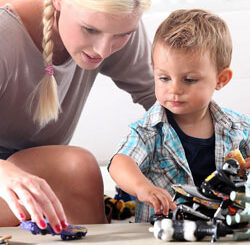
Toddlers (1 to 3 years). This is a very common and often successful age for au pair care. Toddlers are mobile, curious and fast, so supervision and energy are the key skills.
Preschool age and beyond. Easier in many ways. Our article on au pair tasks covers what is typically involved.
If you are unsure, an experienced au pair for an older baby or toddler is the safer starting point.
What experience should the au pair have?
For a baby or toddler, recent, hands-on experience matters much more than a friendly personality. Look for:
- Specific experience with infants or toddlers, such as working in a nursery, caring for a younger sibling, nannying or long-term babysitting.
- Tasks she has actually done: nappy changes, bottle preparation, introducing solids, putting a baby to sleep, bath time.
- References from families or nurseries who can confirm those tasks.
- Calm decision-making in an emergency.
- Willingness to learn your routines, and to ask questions.
Be careful with “I love children” as the main qualification. Affection is lovely, but it does not tell you whether she can safely handle a baby with a fever or a toddler who is choking.
Questions to ask in the interview
- What ages have you cared for, and for how long?
- Describe a typical day with a baby or toddler.
- Have you prepared bottles, formula or purees? How do you do it safely?
- How do you settle a baby who won’t sleep or won’t stop crying?
- What would you do if a toddler had a tantrum in public?
- What would you do if a child started choking or fell and hit their head?
- Do you have a first aid or CPR certificate?
- How do you feel about being up early or working with a strict nap schedule?
Our family interview guide and top things for an au pair interview have more ideas. See also our article on red flags and green flags when choosing an au pair
First aid and safety training
For babies and toddlers, first aid knowledge is not optional.
Ask for:
- A current first aid certificate that includes infant and child CPR. If she doesn’t have one, ask her to complete a course soon after arrival. In Australia, organisations such as St John Ambulance and the Red Cross offer these courses, and they are fairly short.
- A Police Check from her country before arriving to Australia. See our screening process.
Show her, in person:
- Where the first aid kit is
- How to call 000, and how to give your address clearly
- Where your child’s medical information, allergies and medications are written down
- Your nearest doctor, hospital and the poison information line number
Safe sleep for babies
Sleep is the area where mistakes can be most serious. Australia’s national authority on safe sleep for babies is Red Nose, and you can read their current guidelines at rednose.org.au. In general, safe sleep guidance for babies includes:
- Sleeping the baby on their back
- Keeping the face uncovered
- Using a safe cot and mattress that meet Australian standards
- Keeping the cot free of pillows, soft toys, loose bedding and bumpers
- Sleeping the baby in their own safe sleeping space, in the same room as a parent for the first months
- Keeping the home smoke-free
Make sure your au pair:
- Reads and follows the current guidelines
- Knows exactly how you put your baby down to sleep
- Never lets the baby sleep on a sofa, beanbag, pillow or in a car seat out of the car
- Checks regularly, according to your instructions
- Has a baby monitor if you use one, and knows how it works
Safe sleep advice changes over time, so check the Red Nose website yourself rather than relying on what you remember.
Feeding, nappies and daily care
Write a simple routine sheet and stick it on the fridge. For a baby, include:
- Feeding times and amounts. Breast milk, formula, solids or a mixture. Explain how to prepare, store and warm bottles safely, and how to handle expressed milk.
- Allergies and foods to avoid. Be very clear, and list them.
- Choking safety. Which foods to avoid or cut up, and how to supervise meals.
- Nap and bedtime routines. Times, signs of tiredness, favourite comforters.
- Nappy changing. Where things are kept, how to dispose of them, how to spot nappy rash.
- Bath time. Many families prefer to do baths themselves at first. Never leave a baby alone in or near water, even for a moment.
- Medicines. If you want her to give any medicine, give written instructions and doses, and explain exactly what to do. Many families choose not to let an au pair give medicine unless they have discussed it carefully.
- Illness. What to do if the baby has a fever, vomits or seems unwell. When to call you, when to call a doctor, and when to call 000.
For toddlers, add:
- Meal and snack routines, and what foods are allowed
- Toilet training approach, if relevant
- Screen time limits
- Discipline approach: how you handle tantrums and what to avoid
- Safety rules for stairs, gates, the garden, the pool and the road
Toddlers: what to expect
Toddlers can be wonderful and exhausting. An au pair should be ready for:
- Boundless energy. She will need to run, play and stay alert.
- Tantrums. These are normal. A calm, consistent response helps.
- Constant exploring. Everything goes in the mouth, climbs, opens and falls.
- Changing routines. Teething, growth spurts and sleep regressions all affect the day.
- Language development. Au pairs can help with games, songs and conversations. Some families enjoy bilingual play.
- Separation anxiety. Some toddlers cling to parents. Give them time and let the au pair build trust gradually.
A toddler’s safety rule list is long. Spend time during the first week walking through the house with your au pair and pointing out hazards.
Baby-proofing your home
Before the au pair starts, make your home as safe as possible:
- Stair gates and window locks
- Covers for power points and secured cords
- Cupboard locks for cleaning products, medicines, knives and sharp objects
- Secured furniture and TVs (to prevent tipping)
- Safe storage of small objects that could be swallowed
- A safe, fenced pool area, if you have one, plus supervision rules. Pools need special attention in Australia, and the au pair should never be distracted near water.
- A clear list of rules about hot drinks and cooking
- Show her how to use the high chair, pram, car seat, cot and any monitors.
Driving with babies and toddlers
If your au pair will drive your child, read our guide on au pair driving in Australia . For babies and toddlers in particular:
- The right child restraint must be fitted correctly for every trip
- She should practise fitting and adjusting the seat with you
- She should never leave a child alone in the car
- Many families choose to start with short trips only
If you or she are not confident, you can arrange activities within walking distance or use other transport.
Hours, workload and fairness
Caring for babies and toddlers is physically demanding, and long days can be exhausting. Think about:
- Realistic hours. Do not rely on an au pair for every moment of care. She needs breaks, meals, free time and days off.
- Night duty. Many families do not ask an au pair to handle night feeds or night waking as au pairs need to have reasonable working hours and don’t have experience like night nannies.
- Overlap time. Plan for time together with you at the start so she can learn your routines.
- Sick children. Decide how you will handle days when the baby is unwell.
- Housework. Keep it light. A baby or toddler already takes most of an au pair’s energy.
Costs and alternatives
Families sometimes choose an au pair because it can be more flexible or affordable than other options, but that depends on your circumstances. Consider:
- Daycare or a nursery, which offers structured care and often qualified staff
- Family day care, where an educator cares for a small group in their own home
- A nanny, who is often more experienced and may have formal qualifications
- A combination, such as an au pair for afternoons and daycare during the day
Government childcare subsidies may apply to approved services, but eligibility for au pair arrangements is a different question. Check with Services Australia before assuming anything. Our page on Flexible live-in care explains how our service works, and our fees are listed under family fees.
Preparing your baby or toddler for a new carer
- Introduce her gradually. Short video calls before arrival, then short periods together after she arrives.
- Stay close at first. Spend the first days working alongside her, so your child sees you trust her.
- Keep routines consistent. Familiar rituals reassure young children.
- Be patient with separation. Tears at the beginning are common and usually fade.
- Share your child’s likes and dislikes, favourite songs, comforters and games.
For the first days and weeks, see how to welcome your au pair and her early days.
Have a backup plan
Even with the best au pair, there will be days when care falls through: illness, a visa issue, a rematch or a sudden change. For young children, a backup plan is essential.
- A family member or friend who can step in
- A casual babysitter you trust. See find a babysitter
- Flexible work arrangements
- Emergency numbers saved on the fridge and in your phone
If things go wrong, read our guide on what to do if it doesn’t work out.
Setting expectations in writing
Write a short care plan for your child and go through it with your au pair in the first days. It might include:
- Daily routine (feeding, sleeping, play, outings)
- Allergies, medical information and emergency contacts
- Safe sleep rules
- Feeding and food rules
- Rules about outings, prams, public transport and the car
- Screen time and discipline approach
- What to do if the child is sick
- Who to call and when
- Rules about photos and social media for your child
Combine this with your au pair contract and house rules.
A checklist for host families
Before you choose
- Be clear about your child’s age, needs and your own availability
- Look for recent infant or toddler experience
- Check references, police clearances and first aid training. See selecting an au pair
Before she starts
- Baby-proof the home
- Prepare a written routine and emergency information
- Check insurance if she will drive
- Plan your backup care
First two weeks
- Work alongside her
- Review safe sleep, feeding and first aid
- Give regular, kind feedback
Ongoing
- Hold weekly check-ins
- Respect her breaks and days off
- Update the care plan as your child grows
Frequently asked questions
Can an au pair look after a newborn?
Some families do, but it is a big responsibility, and many au pairs are not trained for newborn care. Many families prefer to wait until the baby is a few months old, or choose a more experienced carer. Discuss your situation openly with your agency.
Can an au pair care for a baby on her own?
Yes, if she is experienced, trained in first aid and you are confident in her. Start with you present, then increase gradually.
Do au pairs need first aid training?
It is strongly recommended, and many families require it for babies and toddlers. If she does not have it, ask her to complete a course soon after arrival.
Is an au pair cheaper than daycare?
It depends on your hours, location and arrangement. Compare the full costs, including pocket money, board, insurance and any extras. See family fees.
What if my baby or toddler doesn’t bond with the au pair?
Give it time, and keep routines consistent. Many children take weeks to adjust. If problems persist, speak to your au pair and your agency early.
Can an au pair give my child medicine?
Only if you are comfortable and have given written instructions. Many families keep this task for themselves.
Is it safe to leave my toddler with an au pair near a pool?
Pools require constant, active supervision, secure fencing and clear rules. If you have a pool, make sure your au pair understands the risk and never leaves the child unattended near water.
What if she is not coping?
Talk early and kindly, offer more training and support, and contact your agency if needed. A mismatch is nobody’s fault, and a different arrangement may suit your child better.
Conclusion
An au pair can be a warm, flexible and rewarding choice for babies and toddlers, when the match is right. Focus on real experience, first aid training, safe sleep, clear routines and honest communication, and always have a backup plan.
If you would like help finding a screened au pair with experience in infant and toddler care, register as a host family or contact us. Our team at Au Pair Australia will help you find the right au pair for your family anywhere in Australia.
This article provides general information only and is not medical, legal or safety advice. Safe-sleep guidance, first-aid practice, childcare subsidies and employment rules change. Please check current information with qualified professionals and official sources.